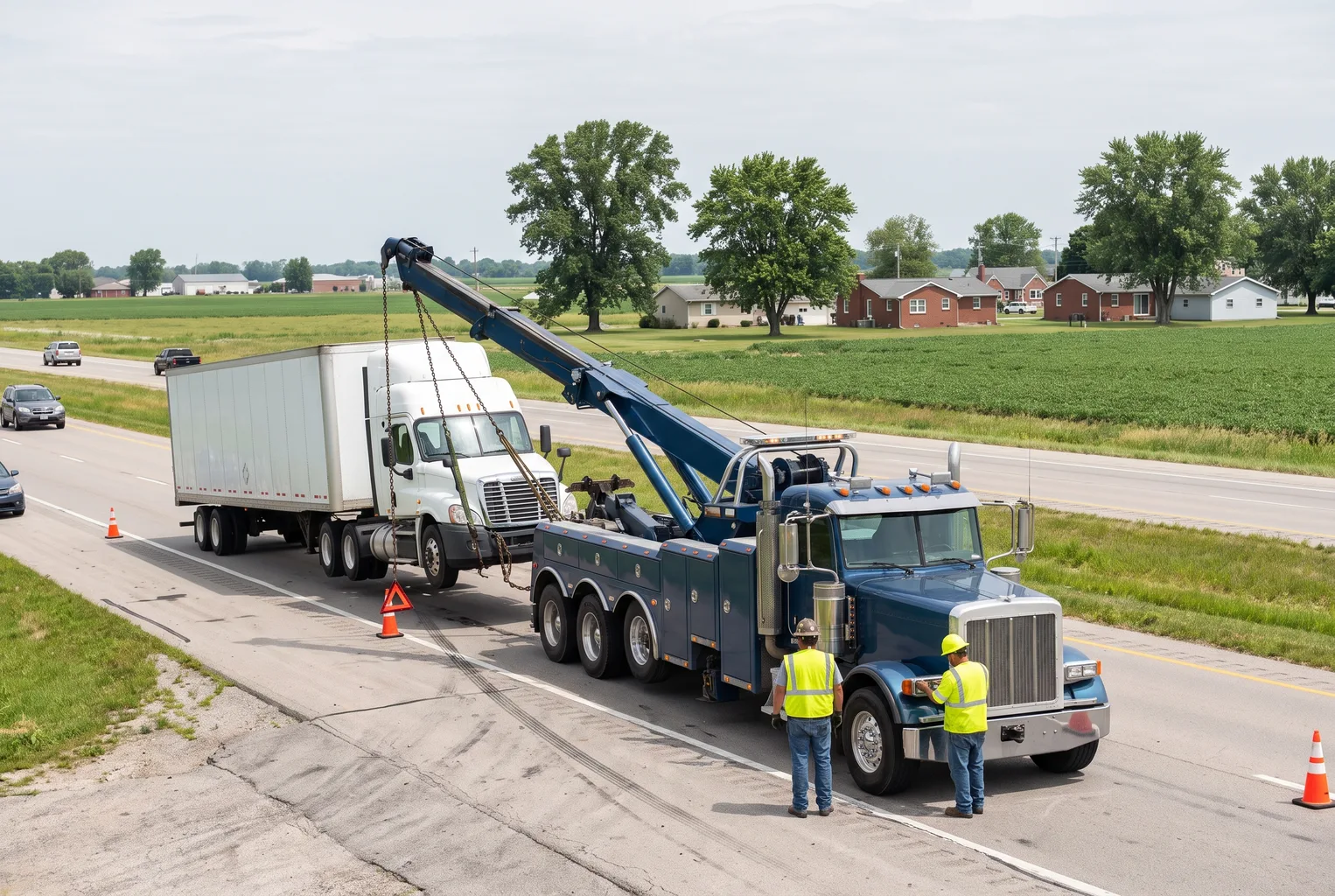
Heavy-duty towing covers vehicles outside the weight and size range a standard tow truck is built to handle — semi-trucks, box trucks, buses, RVs, and similar equipment. These jobs call for different rigging, different equipment, and handling that differs meaningfully from a passenger vehicle, both in the towing itself and in the assessment beforehand.
Fit is largely a matter of vehicle class rather than the nature of the problem: a commercial truck with a dead battery is still a heavy-duty situation because of what it takes to move or stabilize a vehicle of that size, even though the underlying issue might be simple. Youngstown's position near the I-80 and I-76 corridors means this category applies both to commercial traffic passing through the area and to local fleet vehicles operating in and around Mahoning County.
When seeking help for a commercial vehicle, identify the vehicle type, whether it is loaded, its exact location, and any access limitations. A disabled semi on a shoulder and a truck at a private lot can require different information before the appropriate equipment can be considered.
A limitation worth stating directly: heavy-duty towing addresses moving or recovering the vehicle, not diagnosing or repairing whatever caused the vehicle to become disabled in the first place. Cargo, whether the trailer or vehicle is loaded, is one of the factors that shapes how a given job is approached, since it changes both weight and handling.
Aftercare depends heavily on the situation: a commercial vehicle towed after a mechanical failure typically goes to a repair facility equipped for that class of vehicle, while one recovered after leaving the roadway may first need an inspection to confirm it is safe to move further. Either way, the destination is confirmed as part of the same conversation that establishes the rest of the job.
Local context matters more for heavy-duty situations because access for a heavy wrecker or rotator differs from access for a standard tow truck. A disabled semi on the I-80 corridor near Youngstown presents different access details from one at a distribution site farther into Mahoning County; include those details when requesting assistance.
A truck stopped on an active highway shoulder presents a different safety situation from one already off the roadway at a private lot. Describe whether the vehicle is in traffic, on a shoulder, or in a secure lot, and contact 911 first when there is an immediate traffic hazard.
For a tractor and trailer, explain whether both units need to move and whether the trailer is attached. Information about the load, overall dimensions, visible damage and the receiving facility can affect the equipment considered. A passenger-vehicle repair shop may not accept a commercial combination, so the destination and access for unloading need to be discussed separately from simply identifying the vehicle as a truck.
What Heavy-Duty Towing Involves
- Semi-trucks and tractor-trailers
- Box trucks and commercial fleet vehicles
- Buses, RVs, and motorhomes
- Construction or industrial equipment requiring transport
- Recovery of a disabled or off-road commercial vehicle
- Does not include diagnosing or repairing the mechanical issue itself
- Assessing whether a vehicle or piece of equipment can be moved with standard heavy-duty rigging or needs a specialized approach
When Heavy-Duty Towing Applies
- A commercial truck or trailer breaks down or is disabled
- A bus, RV or motorhome needs to be towed or transported
- Equipment needs to be moved from a site
- A commercial vehicle has left the roadway and needs recovery
What Affects the Job
- Vehicle or equipment weight and dimensions
- Whether the vehicle is upright, on its side, or off the roadway
- Cargo status — whether the trailer or vehicle is loaded
- Location and access for heavy-duty equipment
- Distance to the destination
- Time of day and visibility, which affect how a roadside recovery is staged and sequenced
How a Heavy-Duty Job Is Handled
- The vehicle type, condition, and location are confirmed
- The appropriate heavy-duty equipment is determined from the specifics of the job
- The vehicle is rigged and prepared for towing or recovery
- The vehicle is moved to the confirmed destination
Heavy-Duty vs. Standard Towing
- Passenger cars, light trucks, and SUVs are handled under emergency or flatbed towing rather than heavy-duty
- A commercial vehicle that is stuck rather than mechanically disabled may be a winch-out matter instead
Frequently Asked Questions
What size vehicle needs heavy-duty towing instead of standard towing?
Commercial trucks, buses, RVs, and similar equipment that exceed what a standard passenger-vehicle tow truck is built to handle.
Can a loaded trailer be towed?
Cargo status is one of the factors reviewed when a job is assessed, since a loaded trailer changes the weight and handling involved.
Does heavy-duty towing include recovery, not just towing, for commercial vehicles?
Yes. A commercial vehicle that has left the roadway or is otherwise off its wheels falls under heavy-duty recovery rather than a standard tow.
Related Services
- Flatbed Towing
Transporting a vehicle on a flatbed rather than towing it on its wheels, for vehicles that shouldn't be towed conventionally.
Learn more - Winch-Out & Vehicle Recovery
Pulling a vehicle back onto solid ground when it's stuck in mud, snow, or a ditch rather than mechanically disabled.
Learn more
Ready to Discuss Your Project?
Review the available services and prepare the basic details of your project to request an estimate.