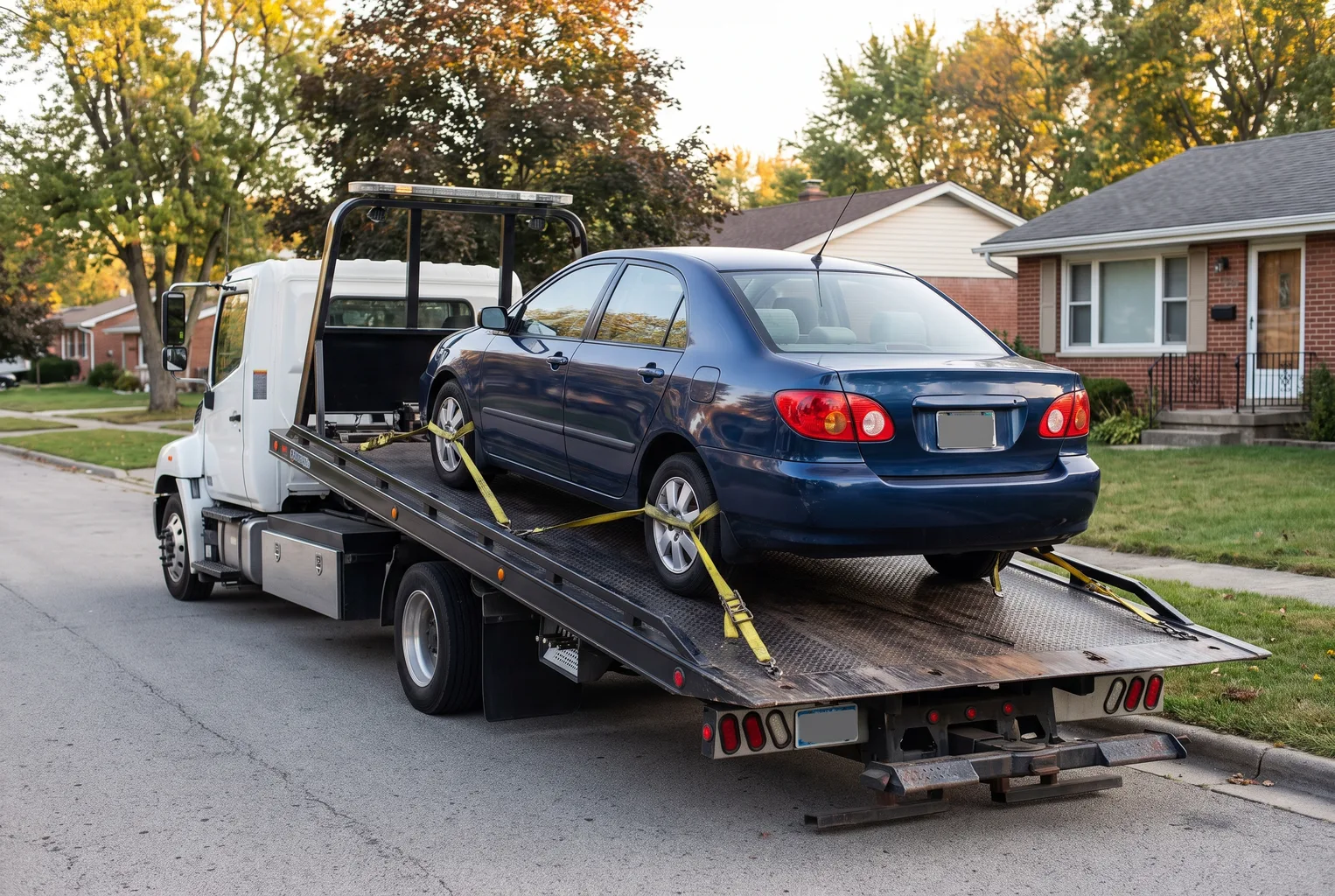
Flatbed towing loads an entire vehicle onto the bed of the truck rather than towing it with two wheels still in contact with the road. That distinction matters for certain vehicles: all-wheel-drive and four-wheel-drive vehicles can see drivetrain strain from a conventional tow, low-clearance vehicles risk scraping, and a vehicle with existing collision damage is generally safer transported without any part of it still bearing weight on the road.
Fit for this service follows directly from those conditions. A standard two-wheel-drive vehicle with normal clearance and no existing damage does not necessarily need a flatbed — a conventional tow may be equally appropriate. Flatbed transport becomes the better option specifically when drivetrain type, ground clearance, existing damage, or trip distance make it the more suitable choice, and that determination is usually straightforward once the vehicle and situation are described.
For flatbed transport, say whether the vehicle starts, whether it is all-wheel or four-wheel drive, and whether damage or low clearance affects loading. An inoperable vehicle may need to be winched onto the bed, while a running vehicle may be driven on; once loaded, the vehicle travels entirely on the flatbed rather than on its wheels.
A limitation worth stating plainly: flatbed towing addresses transport, not the underlying issue that made towing necessary in the first place. A vehicle transported by flatbed still needs whatever repair or resolution its original problem calls for once it reaches its destination.
For a trip from Youngstown or a nearby Mahoning County community to a dealership or specialty shop outside the immediate area, flatbed transport may be worth discussing. Drivetrain type, clearance, existing damage, and the destination are the details that help determine whether it is appropriate.
Aftercare for a flatbed tow is minimal on its own: once the vehicle is unloaded at its destination, the flatbed portion of the job is complete. Whatever repair, inspection, or further transport the vehicle needs from there is a separate matter, typically arranged directly with the receiving shop or dealership rather than as part of the tow itself.
If the vehicle cannot be driven onto the bed, mention that before requesting help so the loading method can be considered. Exact timing and availability depend on the specific situation and should be confirmed directly.
Loading needs space around the vehicle as well as a route for the truck. A low garage entrance, steep driveway, locked wheel or missing key can affect how the vehicle reaches the bed even when a flatbed is otherwise appropriate. Include those details, the vehicle's make and model, and the intended destination. Transport equipment and any additional handling still need confirmation before a particular loading arrangement can be assumed.
What Flatbed Towing Involves
- All-wheel-drive and four-wheel-drive vehicles, where a conventional tow can strain the drivetrain
- Low-clearance or lowered vehicles that could scrape during a standard tow
- Vehicles with existing damage, where flatbed transport avoids adding further damage
- Vehicles traveling a longer distance, where flatbed transport is generally the better fit
- Loading, securing, and transporting the vehicle to the confirmed destination
- Does not include repairing the issue that made towing necessary
When Flatbed Towing Applies
- The vehicle is all-wheel-drive or four-wheel-drive
- The vehicle has low ground clearance
- The vehicle has existing damage that a conventional tow could worsen
- The destination is far enough that flatbed transport is the better fit
What Affects the Job
- Vehicle weight and dimensions
- Drive type — all-wheel or four-wheel drive versus two-wheel drive
- Existing damage and how it affects loading
- Ground clearance at the pickup location
- Distance to the destination
- Whether the vehicle can be driven onto the flatbed directly or needs to be winched on
How a Flatbed Tow Is Handled
- The vehicle and its condition are confirmed before dispatch
- The vehicle is winched or driven onto the flatbed depending on whether it is operable
- The vehicle is secured for the full trip
- The vehicle is delivered to the confirmed destination and unloaded
Flatbed vs. Standard Towing
- Standard towing may be suitable for a two-wheel-drive vehicle with adequate clearance and no damage that affects loading
- Heavy-duty towing is the category to discuss for commercial vehicles and equipment that exceed passenger-vehicle towing needs
Frequently Asked Questions
Why does an all-wheel-drive vehicle need a flatbed instead of a standard tow?
Towing an all-wheel-drive vehicle on its wheels can strain the drivetrain, since all four wheels may be mechanically linked. A flatbed avoids that by lifting the entire vehicle off the road.
Is flatbed towing only for luxury or low vehicles?
No. It applies to any vehicle where drivetrain type, ground clearance, existing damage, or trip distance make it the more suitable option.
Can a vehicle that will not start still be flatbed towed?
Yes. A vehicle that will not start can be winched onto the flatbed rather than driven on.
Ready to Discuss Your Project?
Review the available services and prepare the basic details of your project to request an estimate.